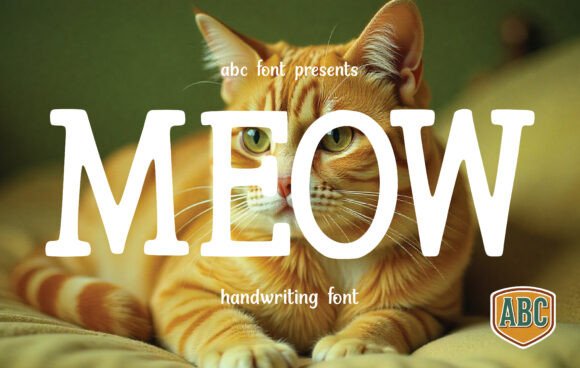
Meow: A Versatile and Charismatic Font for Creative Projects
The Meow font is a standout typeface that blends the structured appeal of a slab-serif with the organic charm of a handwritten design. This unique combination makes it an appealing choice for designers looking for a font that feels both professional and approachable. With its thick, blocky serifs and slight irregularities in line weight, Meow offers a visual warmth that can enhance a wide range of projects.
Designed with a playful yet reliable aesthetic, Meow is ideal for brands and projects that want to convey a sense of comfort and dependability. Its legibility at various sizes ensures that it works well in both large headlines and smaller body text, making it a practical option for different typographic needs.
Key Characteristics of Meow
One of the most notable features of Meow is its balance between structure and spontaneity. The font maintains the strong, geometric form typical of slab-serif typefaces, but adds a subtle human touch through its uneven strokes and soft edges. This duality allows it to feel both authoritative and friendly, which can be particularly beneficial in contexts where trust and accessibility are important.
The thick serifs of Meow contribute to its solid, dependable appearance, while the slightly irregular lines introduce a sense of authenticity. These imperfections prevent the font from feeling too rigid or artificial, giving it a more relatable and engaging presence. This characteristic makes Meow especially effective in designs that aim to evoke a personal or community-oriented vibe.
Meow also demonstrates strong versatility across different mediums. Whether used in print or digital formats, it retains its clarity and visual impact. Its robust design ensures that it remains readable even when scaled down, making it suitable for everything from website headers to product labels.
Practical Applications and Use Cases
Meow is particularly well-suited for pet-related branding, where its friendly and approachable style can resonate with audiences. It can be used for logos, packaging, or marketing materials that aim to reflect the personality of a pet or a pet-friendly business. Its sturdy structure also makes it a good fit for educational content, such as posters, worksheets, or instructional guides, where clarity and readability are essential.
Cafes, bakeries, and other hospitality businesses may find Meow useful for menu designs or signage. Its warm, inviting appearance can complement the cozy atmosphere of these spaces, while its legibility ensures that customers can easily read the information presented. In this context, Meow serves as both a functional and aesthetic asset.
For bloggers and content creators, Meow can add a distinctive visual element to articles, headings, or social media posts. When paired with simpler fonts, it can create a clear visual hierarchy that enhances the overall design without overwhelming the reader. This flexibility makes it a valuable tool for those who want to maintain a cohesive brand identity across multiple platforms.
Strengths and Limitations
A major strength of Meow is its ability to convey both authority and approachability. This dual nature makes it a strong choice for projects that require a balanced tone, such as corporate communications, community initiatives, or lifestyle branding. Its consistent stroke weight and clean forms ensure that it performs reliably in different typographic settings.
However, Meow may not be the best choice for all types of projects. Its thick, blocky appearance could be overwhelming in minimalist or high-tech designs that prioritize simplicity and elegance. Additionally, while its handmade qualities add character, they may not align with the expectations of more formal or traditional audiences.
Designers should also consider the context in which Meow will be used. For example, in long-form text, its boldness might require careful spacing and line height adjustments to maintain readability. When used in smaller sizes, the slight irregularities in the strokes may become more pronounced, potentially affecting legibility.
Who Benefits Most from Meow?
Entrepreneurs and small business owners who are building a brand around a friendly, community-focused identity may find Meow to be a valuable asset. It can help reinforce a sense of trust and familiarity, which is crucial for establishing a connection with customers. This makes it particularly relevant for pet shops, wellness centers, or local cafes.
Educators and content creators can also benefit from using Meow in materials that aim to engage students or readers in a more informal way. Its warm, accessible style can make complex information feel less intimidating, encouraging a more positive learning experience. When paired with simpler fonts, it can create a visually appealing contrast that enhances the overall design.
Freelancers and designers working on creative projects may appreciate Meow’s ability to add a unique touch without being overly complicated. Its versatility allows it to be used in a variety of contexts, making it a reliable choice for those who need a font that can adapt to different needs.
Recommendations for Effective Use
To get the most out of Meow, designers should consider how it will interact with other elements in their work. Pairing it with clean, modern sans-serifs or simple scripts can create a balanced composition that highlights its strengths without causing visual clutter. This approach can help maintain a professional and organized look while still allowing Meow to stand out.
Testing Meow in different sizes and formats is also recommended. While it performs well at larger sizes, its effectiveness at smaller sizes may vary depending on the specific use case. Adjusting spacing, line height, and typography settings can help optimize its readability and overall impact.
Finally, understanding the audience and the message being conveyed is key to determining whether Meow is the right choice. For projects that emphasize warmth, reliability, and a human touch, Meow can be an excellent option. However, for more formal or technical applications, a different typeface may be more appropriate.
In summary, Meow is a versatile and expressive font that offers a unique blend of structure and personality. Its strengths lie in its legibility, warmth, and adaptability, making it a practical choice for a wide range of design projects. By considering its characteristics and limitations, designers can effectively incorporate Meow into their work and achieve a visually compelling and meaningful result.